How weather affects your garage door—and when to call us
Your garage door faces sun, wind, moisture and the conditions around your property. The right specification and regular care help it keep working as intended. If weather has changed its movement or damaged the door, we’ll assess the complete installation before you use it again.
Our quote form opens on our main B&D website. For a fault, use the service or repair option in this guide; charges are confirmed separately.
Sun and temperature
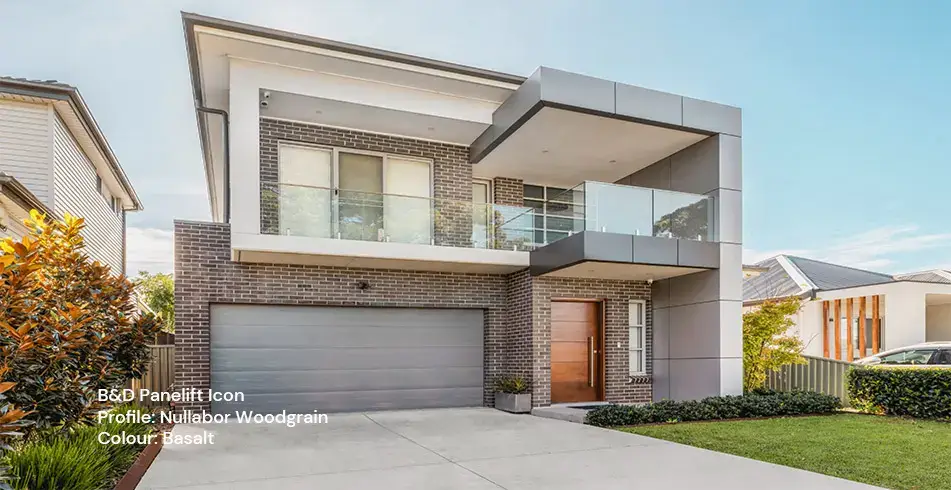
Finishes and components experience changing temperatures, and prolonged exposure can affect appearance over time. Check colour and texture samples at your home; darker, smooth surfaces can show normal flat-panel undulations more clearly.
Insulation can slow heat transfer through a suitable door, but it is not a remedy for binding panels, damaged tracks or an opener operating outside its specified conditions. Our Insul-Shield option is for eligible new sectional doors. It does not guarantee a particular garage temperature or extend every component’s lifespan.
Rain, salt and sheltered surfaces
Moisture, coastal salt and industrial fallout can affect coatings and metal parts. Follow the owner handbook for washing and cleaning, including areas under eaves or canopies that rain does not naturally wash. Tell us about corrosive exposure, especially properties within one kilometre of coastal or industrial environments.
Keep accessible drainage and the doorway clear. A bottom weatherseal helps limit entry but does not make the garage floodproof. Repeated water entry may need assessment of the floor, driveway or building drainage as well as replacement of a worn seal.
Wind resistance is a complete-system choice
A wind-rated curtain or sectional panel needs the right guides, fixings, dimensions and supporting structure. We assess the site’s required classification rather than choosing a door from a regional map alone.
Storm-Shield is a specified sectional system with Tracklock components. Its published configuration refers to Wind Region C, Terrain Category 2 and classification up to C2; C2 is a classification, not the name of a wind region. The applicable certification and door size must be checked for your property.
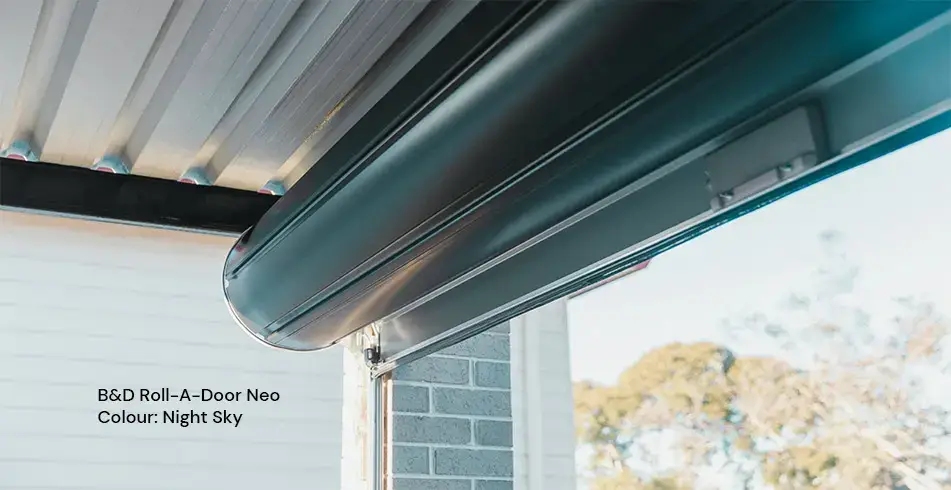
Our wind-locked roller configurations have their own model and size limits. Standard Neo is not automatically wind-rated, and a security upgrade does not establish cyclone certification. Strong wind can also trigger an opener’s obstruction response; a wind rating does not promise unrestricted operation during a storm.
After an impact or severe weather
Do not operate a door that is bent, displaced, hanging unevenly or visibly damaged. Keep people clear and avoid releasing an open or unbalanced door. Springs, cables and supports may be under load even when the opener is off.
Take photographs from a safe position and describe the damage when booking assistance. A technician can assess panels or curtain, guides, fixings, seals, locks and opener. Whether a section can be repaired or replaced depends on the model, available parts and the extent of damage; filler or paint is not a structural repair.
Plan care for your location
Follow the model’s owner checks and professional service schedule. Recurring noise, scraping, reversal or new gaps need attention before the next scheduled visit. We’ll discuss exposure, existing condition and the right rated system if you are replacing the door.
Arrange a repair or explore wind-rated roller doors and Storm-Shield.
Brochures and model guides
Use the guide for your actual model and supplied configuration. These references explain the specifications and conditions discussed above.
Talk to us about your garage
Tell us what you have now and what you want to improve. We’ll help you choose the right next step through our dealer network.