Five ways to keep your sectional garage door clean
A clean garage door makes a difference to the whole front of your home. Regular care also helps remove the dirt, salt and grime that can build up on your door. Here’s how we recommend looking after your sectional door between services, with a few important precautions for its finish and moving parts.
Before you start: make the door safe
Start only when the door is fully closed and operating normally. Keep children, pets and other users away. Follow your opener’s instructions for isolating its power supplies before cleaning, including any fitted battery backup. Turning off the mains alone may not stop a battery-backed opener. Never spray the motor, controls, wiring or electrical fittings with water.
Electrical isolation and the manual release do different jobs: one removes operating power; the other disconnects the door from the opener. Do not pull the release on an open, damaged or unbalanced door. If you need to disengage a healthy door, follow the instructions for your exact opener with the door closed. Remember that a disengaged door is no longer held locked by the opener.
1. Lift away loose dust and debris
Use a soft brush or microfibre cloth to remove dust, cobwebs and leaves from accessible surfaces. Work gently around panel edges and seals. Keep your fingers out of hinges, panel joints, rollers and tracks, and avoid reaching above your comfortable working height.
Do not move the door to clean a section while your hands or cleaning tools are near its moving parts. If a surface cannot be reached safely, ask your dealer to include it in a service.
2. Wash the panels without damaging the finish
For routine cleaning of a compatible coated steel surface, use clean water and a soft cloth or brush. A mild detergent can help lift dirt; rinse away residue and dry with a soft cloth. Avoid abrasive pads, harsh chemicals and forceful scrubbing that could damage the finish.
Our between-service care advice recommends washing the external surface every 14 days, and more often in coastal areas. Salt and sheltered dirt can build up even where the rest of the door receives rain. Adjust your cleaning frequency to the conditions and the care instructions supplied with your door.
Check the finish before choosing a cleaner. Timber, specialty cladding, decorative finishes and window inserts may need different care from a painted steel panel. Do not transfer a product intended for metal tracks onto glazing, seals or a decorative surface. If you’re unsure what your door is made from, send your dealer its model and finish details before applying a cleaner.
3. Keep accessible tracks clean
Remove loose debris from accessible track surfaces with a soft cloth or a vacuum attachment, keeping clear of cables, brackets and rollers. Do not loosen fixings, remove rollers or try to straighten a bent track. Damage, rust affecting a component, or rubbing during operation needs professional assessment.
Our maintenance instructions include specific products for some guide tracks. These are component-specific instructions, not a recommendation to spread solvent or lubricant across the door. Use the care instructions for your actual door and finish. Do not pack tracks with grease to hide a scraping noise.
4. Wipe the seals and check their condition
Use a soft damp cloth to wipe accessible weather seals. Look for cracking, tears, sections pulling away or a new gap beneath the closed door. Seals help reduce draughts and the entry of dust and moisture, but they do not make a garage airtight or floodproof.
If a seal has deteriorated, ask us to identify the correct replacement for your door. A gap can also come from door alignment or the floor, so forcing a larger seal into place is not always the answer. Leave any adjustment of the door, bottom brackets or lifting cables to a trained technician.
5. Keep cleaning and servicing on your calendar
Cleaning complements professional servicing. It does not replace checks of the springs, cables, mounting points, opener settings or safety equipment. We recommend a service within the first 12 months and at least every two years thereafter, with the interval adjusted to your model, usage and conditions. The current opener manuals also list a first service at 12 months or 3,000 cycles; ask your dealer to schedule against the applicable interval.
At a service, the technician checks alignment, spring tension, fixings, lubrication, opener travel and safety components. Repairs or replacement parts may be additional work and should be quoted separately. Keep the service record with your warranty documents.
Common cleaning questions
Should I lubricate every part after cleaning?
No. Lubricants are specific to the component. Our sectional-door care guidance recommends an all-purpose machine oil such as Inox for suitable hinges, and warns against grease. Do not treat nylon rollers, locks, tracks and springs as interchangeable lubrication points. Ask your technician to demonstrate the owner-care points on your door.
What if the door still squeaks after cleaning?
Do not keep adding lubricant or cycling the door to investigate. A new or persistent noise may indicate wear, alignment or spring problems. Read our guide to unusual garage door noises and arrange an inspection if the sound continues.
Where can I check the instructions for my opener?
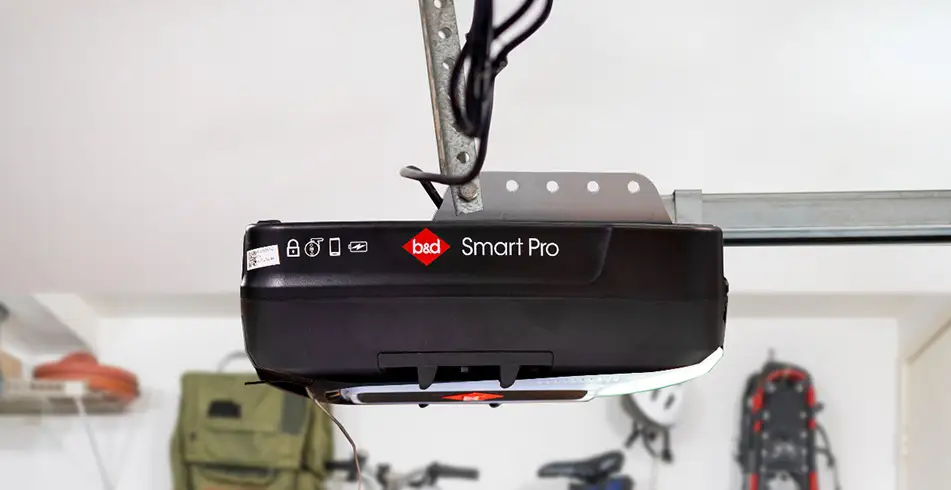
Match the model on your opener’s label before using any instructions. Our Power Drive RDO-1V4 and Roll-A-Pro RDO-1V3 manual (161061_05) and Smart Pro SDO-9V3, Smart SDO-7V3 and Secure SDO-6V3 manual (161083_02) cover different controls. For another model or generation, use our owner manuals or ask us for help.