Choose a roller door around the way your business works
Your business entrance needs to suit the job, from the vehicles passing through to the busiest part of the day. We’ll help you specify the door, operator and controls together, with the opening, workload, security and site conditions clearly defined before manufacture.
Our quote form opens on our main B&D website. For a fault, use the service or repair option in this guide; charges are confirmed separately.
Measure the usable opening and the installation space
Start with the clear height and width your vehicles or equipment need. The manufactured door width includes curtain overlap, and the usable drive-through height may be lower than the nominal door height. Allow for guides, brackets, the rolled curtain, operator and any manual chain or control equipment.
We also check the wall or frame that supports the installation. A large door cannot be approved from opening dimensions alone. Existing damage, inadequate supports or a change in vehicle height may affect the solution.
Describe the workload in practical terms
Tell us the expected complete cycles per day, the busiest period, the number of users and whether the door stays open during trading. A door used twice a day has a different job from an entrance cycling repeatedly in a short period.
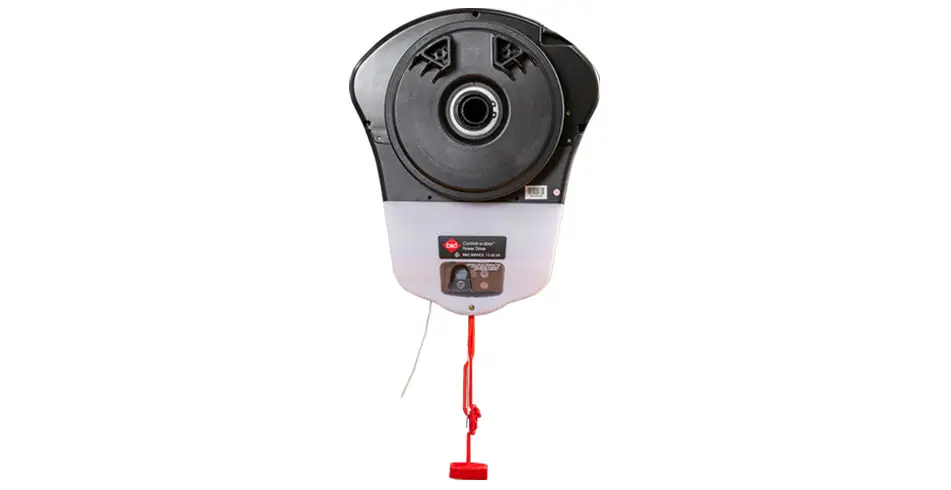
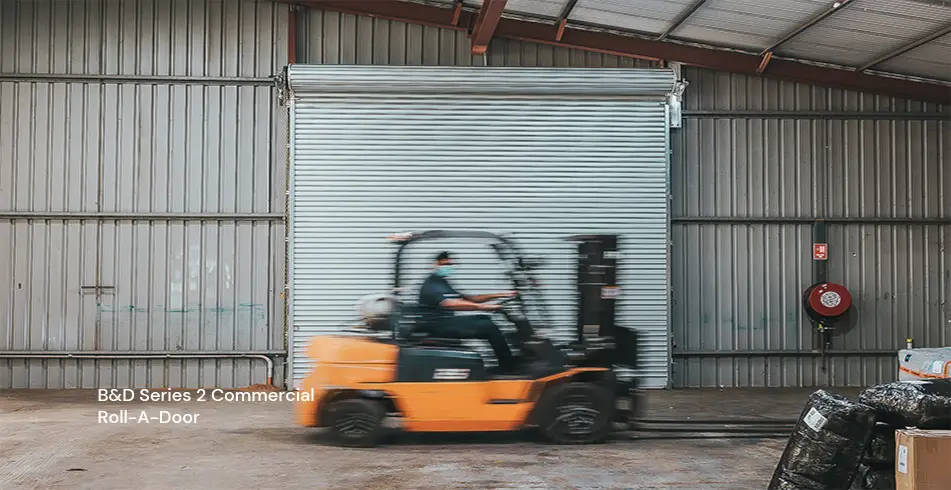
Commercial operator selection considers door area, gross weight, balance, wind-lock arrangement, duty and control mode. Do not select a motor from horsepower or peak force alone. Power Drive and Roll-A-Pro are residential openers; they should not be specified as commercial-duty equipment from this article.
Compare the door and operator families
| Requirement | What we assess |
|---|---|
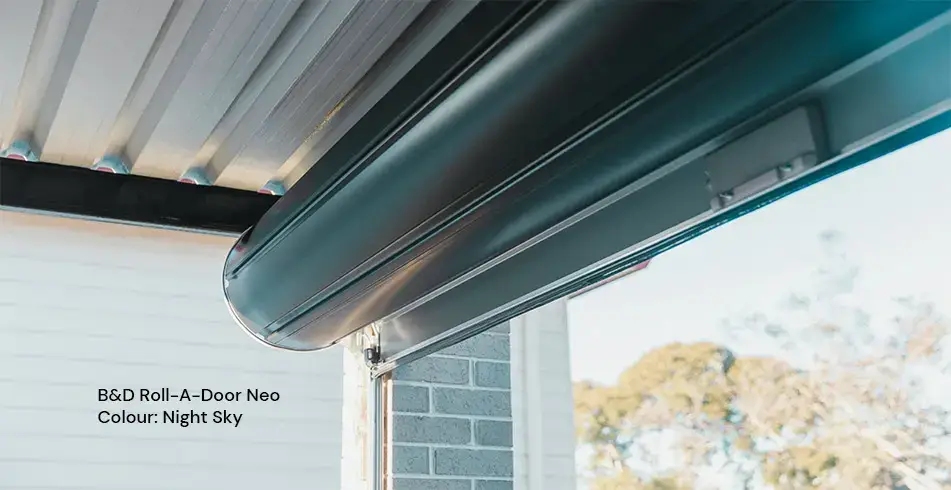
| Rolling steel curtain | Appropriate commercial Roll-A-Door or Rollmasta configuration, size and guides |
| Shutter application | The specified shutter construction, security and operating duty |
| Wind exposure | Certified door size, guide, substrate and fixing arrangement for the site |
| Frequent controlled access | An approved operator, controls and safety equipment for the usage pattern |
| Light or ventilation | Permitted curtain options without compromising the required rating |
Residential R1P/R3F Rollmasta specifications do not define the separate commercial R2F model. Likewise, a lightweight aluminium construction is not automatically an insulated door. Ask for the particular system’s documented performance rather than assuming it from the material.
Specify access and protection
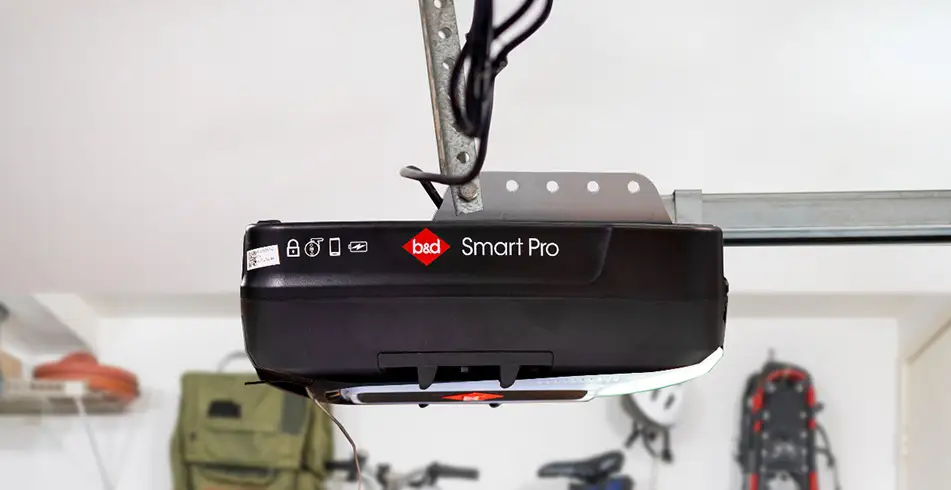
Hiro GDO-12, Toro GDO-10 and Axess Pro 3100 have different control packages and limits. Hiro’s optional Smart Hub is not a feature of the GDO-10 configuration in the trade guide. Toro includes a Logic Console and integrated battery backup. Axess Pro arrangements vary between hold-to-run control and fully configured automatic systems.
Your installer must confirm the correct operator and application. Include beams, pedestrian separation, emergency access, key switches or access schedules where required. Do not assume residential app features or an unrestricted automatic-closing mode are included.
Compare the complete quote
Ask for the door model, operator version, controls, safety equipment, installation, electrical requirements, removal of old equipment, commissioning and maintenance plan. Confirm the expected lead time and the warranty category for the actual business use.
Commercial terms differ from residential Total Confidence packages. A spring design-cycle rating is not the warranty, and a door warranty does not approve an unsuitable operator. We’ll help you document the complete system. Explore commercial doors and commercial openers to prepare your enquiry.
Brochures and model guides
Use the guide for your actual model and supplied configuration. These references explain the specifications and conditions discussed above.
Talk to us about your garage
Tell us what you have now and what you want to improve. We’ll help you choose the right next step through our dealer network.