Five garage door noises you shouldn’t ignore
You get used to the sound of your garage door. When that sound changes, it’s worth listening. We’ll help you recognise five common warning noises, understand what might be behind them and decide when to call us. A sound can point to a problem, but it cannot confirm which part needs repair.
Stop first if the door looks or moves differently
If a new noise comes with jerking, a crooked door, a loose cable, visible damage or an opener that strains without moving the door, stop using it. Keep everyone clear and arrange a repair. Do not run repeated opening and closing cycles to reproduce the noise.
A loud bang followed by a door that will not move may indicate spring failure. Do not pull the manual release, try to lift the door or pass beneath it. Read our broken-spring safety guide and call our team.
1. Grinding or scraping
Grinding can occur when moving components rub, wear or lose correct alignment. Worn rollers, damaged tracks or an opener problem can sound similar. Adding lubricant is not a reliable diagnosis and will not repair a bent component.
From a safe position, note whether the noise appears at the same point in the door’s travel, and whether the door itself moves unevenly. Do not put your hands into the track or remove the opener’s protective cover. Report what you noticed to the technician; let them check the door and opener together.
2. Banging
A repeated bang during travel can be associated with loose or moving panels, a balance problem or another mechanical fault. On a sectional door, several panels and hinges move together as the door follows its tracks. A fault in that movement can place extra strain on the system.
Do not assume a bang means a loose screw you can safely tighten. Door brackets, cables and spring hardware carry load. Stop operation and book an inspection, especially if the sound is new, the door is tilted or a panel has shifted.
3. Squeaking
A squeak can come from a dry hinge or another moving part, but it can also signal corrosion or wear. For an otherwise healthy door, the correct routine cleaning and component-specific lubrication may help. Follow the care instructions for your door, rather than spraying every part.
Our sectional-door guidance identifies all-purpose machine oil such as Inox for suitable hinges. Roller-door guides have different requirements: the Power Drive and Roll-A-Pro installation manual specifies silicone spray for the door guides and rules out WD-40, RP7 and petroleum grease there. A product named for one component is not automatically suitable for another.
If the sound continues, or you can see corrosion on springs or damage to cables, stop using the door and book a service. Do not handle or adjust springs yourself.
4. Rattling
A rattle may come from loose fixings or movement in the door, tracks or opener mounting. It needs attention because the same hardware helps keep the system aligned and secure.
Look only from a safe position for an obvious change, such as a displaced part. Leave tightening, track alignment and opener-mount adjustments to the technician. A service checks mounting points and moving components together, rather than treating the loudest part in isolation.
5. Popping
Popping on a door with torsion springs can be a warning of spring trouble. These springs store substantial energy. Do not climb up to inspect them closely, wipe or lubricate them to silence the noise, or attempt a tension adjustment.
Stop operating the door and arrange professional help. If the door is open or partly open, keep the area clear and do not release it from the opener. A damaged or unbalanced door may fall rapidly when disengaged.
Beeping and flashing are a different kind of warning
A beeper or flashing light can be an opener status signal rather than a mechanical noise. The meaning depends on the model, which light is flashing and whether the opener is in normal operation or a diagnostic mode.
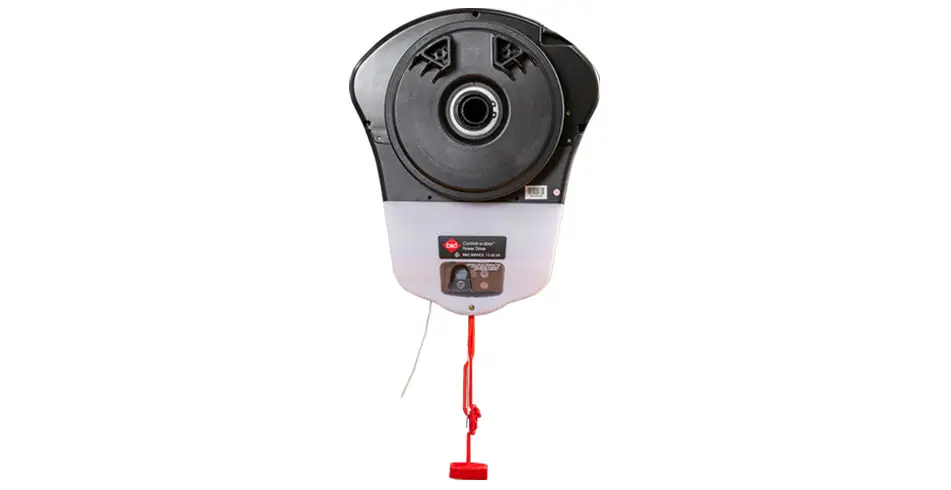
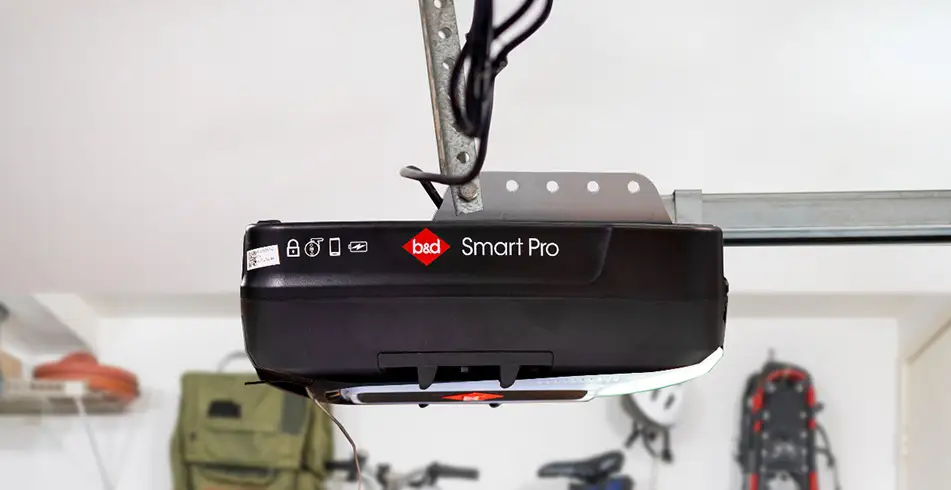
For example, the Smart Pro SDO-9V3, Smart SDO-7V3 and Secure SDO-6V3 manual lists six main-light flashes after operation as a maintenance reminder. Power Drive RDO-1V4 and Roll-A-Pro RDO-1V3 use their own indicators. Record the exact pattern instead of assuming the same flash count means the same thing across the range. Our beeping and flashing guide helps you find the right starting point.
Help us diagnose the problem
- Tell us your door type, opener model and approximate installation date.
- Describe the sound and where in the travel it occurred.
- Let us know about any recent impact, storm, power interruption or change in operation.
- Share any visible damage and indicator pattern without moving closer to a damaged door.
- Have the last service details available if you can.
We recommend servicing within the first 12 months and at least every two years thereafter, adjusted for use and your product’s requirements. New noises need attention when they appear; don’t wait for the next scheduled visit. Cleaning and service guidance is available in our garage door maintenance guide.
Find the instructions for your model
Match the model on your opener’s label before using any instructions. Our Power Drive RDO-1V4 and Roll-A-Pro RDO-1V3 manual (161061_05) and Smart Pro SDO-9V3, Smart SDO-7V3 and Secure SDO-6V3 manual (161083_02) cover different controls. For another model or generation, use our owner manuals or ask us for help.