Insulated or non-insulated: which garage door suits your home?
If you spend time in the garage or have rooms beside it, insulation may be worth considering when you choose a new door. It slows heat transfer through the insulated construction. Whether it makes a noticeable difference to your home also depends on the rest of the garage, its openings and how you use it.
Our quote form opens on our main B&D website. For a fault, use the service or repair option in this guide; charges are confirmed separately.
Compare what you are buying
Our Insul-Shield option uses a graphite-infused expanded polystyrene core with a polypropylene backing sheet behind the selected steel sectional panel. Its stated thermal resistance is R-value 1.4. That is a specification for the referenced construction, not an energy rating for your entire house.
A non-insulated door does not include that added insulating layer. It may suit a garage used mainly for parking or storage, particularly where the wider building is uninsulated or heavily ventilated. We’ll discuss your priorities and the complete door package rather than assume one choice is right for every property.
Ask where heat is moving
| Question | Why it matters |
|---|---|
| Is the garage attached to living areas? | Adjacent walls, ceilings and internal doors also affect heat transfer |
| Are the roof and walls insulated? | An insulated garage door cannot compensate for every other surface |
| Are there gaps or required vents? | Air exchange differs from heat conduction through the panel |
| How often is the door open? | Opening the doorway changes conditions regardless of panel insulation |
| What is the garage used for? | Parking, storage and a regularly used workspace create different priorities |
An unconditioned garage is not automatically made into a habitable room by adding insulation. Any change of use needs appropriate building advice.
Understand the acoustic result
A tested Panelift Insul-Shield system with jamb and lintel seals achieved an 18 dB result in Acoustic Logic testing. It describes that assembly, not a guaranteed 18 dB reduction in every garage or at every frequency. Noise can also travel through walls, roof, gaps and the open doorway.
Door operating noise is a separate issue. New scraping, rattling or uneven travel needs assessment; insulation is not a repair for worn hardware or poor balance.
Confirm the available configuration
Insul-Shield is ordered with an eligible new Panelift or Panelift Icon door. Current product guidance does not offer it as a retrofit. Nullarbor Smooth is excluded, and insulated door specifications exclude window combinations. Storm-Shield and designer constructions need their own checks; do not assume they take every standard option.
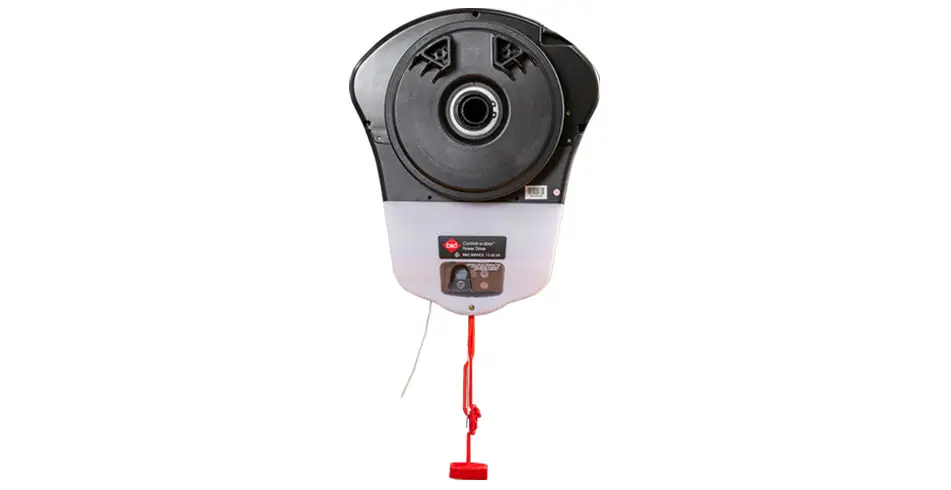
The finished weight affects the springs and opener selection. We specify the full assembly, including any approved seals, rather than adding material without checking balance and capacity.
Compare value without assuming a saving
Ask for an itemised quote for the insulated and non-insulated versions of the same eligible door. Compare the construction, seals, opener, installation and warranty, alongside any other building work needed.
We cannot promise a particular temperature, electricity-bill reduction, payback period or carbon saving from a door alone. Read the Insul-Shield details and bring your garage’s layout and usage to your measure and quote.
Brochures and model guides
Use the guide for your actual model and supplied configuration. These references explain the specifications and conditions discussed above.
Talk to us about your garage
Tell us what you have now and what you want to improve. We’ll help you choose the right next step through our dealer network.