Suspect a broken garage door spring? Here’s what to do
A garage door that suddenly bangs, stops moving or sits crookedly needs attention. If you suspect a broken spring, stop using the door and call us. We’ll help you arrange a professional inspection so you can get back to using your garage safely.
What to do right now
- Stop operating the door. Do not press the remote again to see whether it will move this time.
- Keep people and pets away. Do not walk or drive under a door that is open, partly open or unstable.
- Leave the manual release alone. A door with weak or broken springs may fall rapidly when it is disconnected from the opener.
- Do not force, lift or prop the door. Leave a trapped vehicle where it is and make other transport arrangements.
- Call 13 62 63 or book a repair. Tell us the door’s position, the symptoms and whether the garage is unsecured.
If the door is already closed, leave it closed. If it is open or partly open, do not try to lower it yourself. Keep the area clear until a trained technician can make it safe. For urgent help, use our emergency repair information; after-hours availability depends on the local dealer.
Five signs that a spring may have failed
| What you notice | What it can mean | What to do |
|---|---|---|
| A sudden loud bang | A spring may have released stored tension. | Keep clear and stop operation. |
| The door suddenly feels unusually heavy | The springs may no longer be balancing the door. | Do not lift it again to confirm the fault. |
| The opener hums or strains but the door barely moves | A spring, door or drive fault may be preventing movement. | Stop the opener; do not increase its force settings. |
| A visible break or gap in a spring | The spring may have fractured. | Do not touch it or climb closer to inspect it. |
| The door jerks or sits unevenly | A spring or another load-bearing component may have failed. | Keep everyone away and arrange a repair. |
These are warning signs, not a diagnosis. A cable, track or opener fault can produce similar symptoms. You do not need to identify the failed part before calling us.
Why the manual release is not the answer
The springs counterbalance the door’s weight. The opener is designed to move a correctly balanced door, not compensate for a broken spring. When the spring system is damaged, disengaging the opener can remove the restraint that is holding the door in place.
Our manual-release guides are for a mechanically sound door, such as during a power interruption. They are not a way to operate a door with a broken spring, frayed cable or other load-bearing fault. Do not use the release cord as a lifting handle.
Why springs need professional replacement
Garage door springs and their associated brackets and hardware are under high tension. Loosening a fixing, disconnecting a cable or trying to wind a spring can release that energy unexpectedly. Spring replacement, tensioning and balancing belong with a trained garage door technician.
The technician needs to assess the whole door, identify the correct spring arrangement and check related components. The repair may include checks of cables, drums, tracks, fixings, door balance and the opener’s safety operation. The required work and replacement parts depend on the inspection; a spring fault does not automatically mean the entire door must be replaced.
How long do garage door springs last?
Our warranty information lists these model-specific spring cycle references:
| Door model | Published spring cycle reference |
|---|---|
| Roll-A-Door | 30,000 cycles |
| Designer Door in residential use | 20,000 cycles |
| Panelift Icon | 20,000 cycles |
| StormShield | 20,000 cycles |
| Flex-A-Door | 20,000 cycles |
| Rollmasta | 15,000 cycles |
| Firm-A-Door | 15,000 cycles |
| Panelift | 10,000 cycles |
These cycle figures are not a guaranteed replacement date or a promise of fault-free operation. They are separate from the component warranty period: our November 2025 general warranty terms list seals, springs and lifting cables at one year. Use the warranty applicable to your product and purchase; a spring design-cycle figure does not extend that period.
Reduce wear with regular servicing
Repeated use and corrosion can affect spring condition. Professional servicing checks the spring system and door balance before extra load is transferred to the opener or other parts. It cannot guarantee a spring will never fail.
We recommend a professional service within the first 12 months and at least every two years thereafter. Your dealer may recommend a shorter interval for frequent use or demanding conditions. Keep the service record and report any new noise, change in movement or visible damage as soon as it appears.
Before you call
Have your address, door type, approximate age and last service details ready if available. Let us know if the door is open, closed or obstructing access, and whether you heard a bang or noticed damage. Photos taken from a safe position may help; there is no need to move the door for a better view.
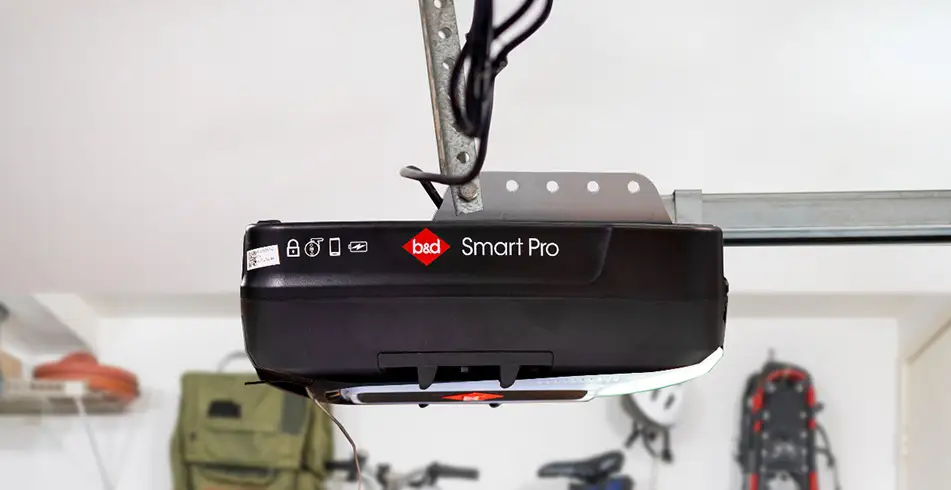
For the opener safety warnings behind this advice, see the operation sections of our Power Drive and Roll-A-Pro manual and Smart Pro, Smart and Secure manual. If your model is different, our team can help locate its instructions.