Caring for your garage-door springs
Garage-door springs counterbalance the door, helping it move as intended. They are also under substantial tension. The most useful care you can provide is to follow the correct service schedule, notice changes and arrange qualified help. Adjusting or replacing a spring is work for a trained garage door technician.
Our quote form opens on the main B&D website.

Understand what a cycle rating means
An opening and closing cycle adds use to the door system. Spring selection and the rated cycle reference depend on the model and specification. There is no reliable universal promise that every spring will last seven to ten years, and a spring can fail without a gradual warning.
A design-cycle reference is also not the same as a component warranty period. The November 2025 general B&D warranty table lists seals, springs and lifting cables at one year. Read the terms that apply to your product and purchase rather than converting a cycle figure into additional years of cover.
Have balance and condition checked professionally
During servicing, the technician can assess balance, spring condition, signs of wear or corrosion and related hardware. Correct balance matters for both the door and the opener. Ask which repairs or replacement parts are needed and whether the selected spring arrangement suits the door and its use.
Do not tighten or loosen spring fixings, winding components, cables or bottom brackets. Do not attempt to correct balance by increasing opener force. A different motor cannot make a broken or incorrectly balanced spring system safe.
Know the warning signs—and their limits
- A sudden bang from the garage.
- A door that has become unusually heavy, uneven or difficult to move.
- Visible damage or a gap in a spring, observed from a safe position.
- The opener straining, repeated stopping or jerky movement.
These observations need assessment; they are not a diagnosis by themselves. Stop using an unsafe door, keep people clear and do not release an open or unstable door from the opener. Do not deliberately test the weight of a door with a suspected spring failure.
Use the schedule for the actual system
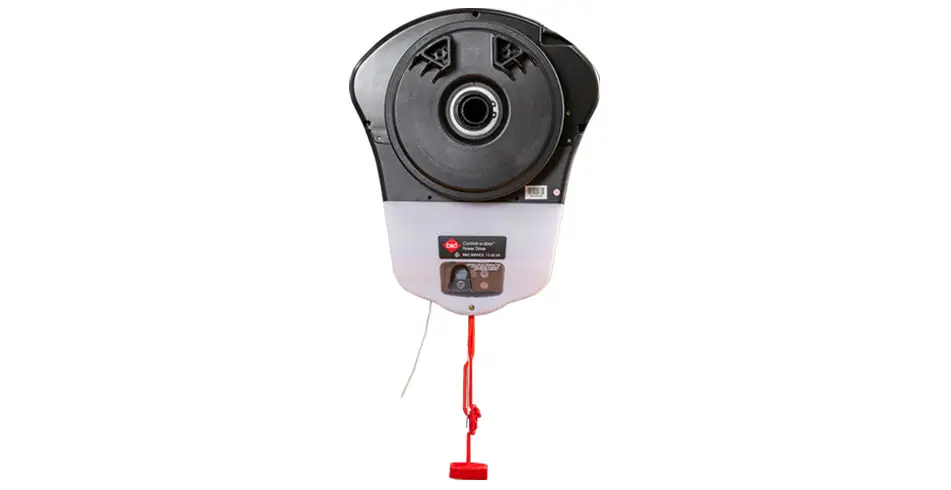
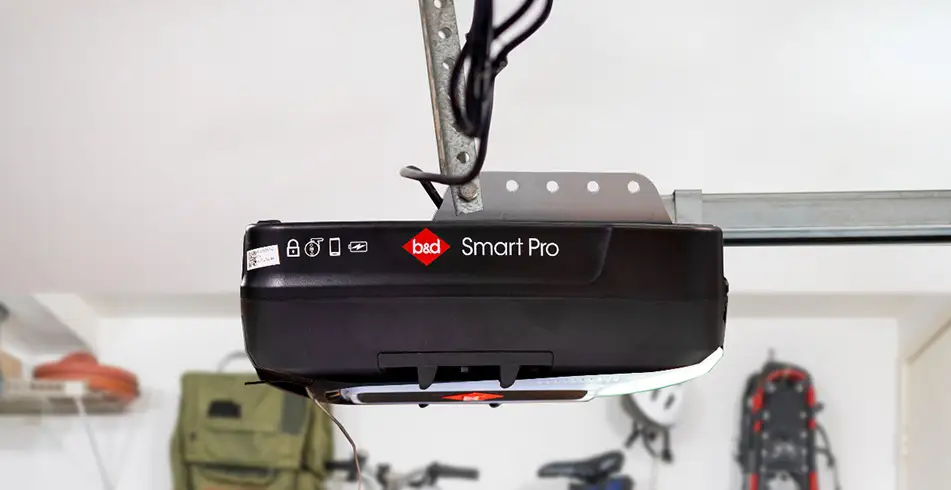
Follow the care and service schedule supplied with your actual door and opener. Our current Power Drive RDO-1V4/Roll-A-Pro RDO-1V3 and Smart Pro SDO-9V3/Smart SDO-7V3/Secure SDO-6V3 manuals call for the initial service within 12 months or 3,000 cycles, whichever comes first, then the listed ongoing service schedule. High use or particular conditions may need additional attention. Keep service records and use the applicable warranty terms.
Tell the technician how often the garage is used and about corrosion, water exposure or repeated faults. Extra attention may be needed for the conditions. Do not use a general article’s annual or two-year interval in place of the actual product instructions.
Leave spring treatment to the service technician
Cleaning and lubrication requirements differ between door components. A recommendation for a rolling-door guide is not a recommendation for a torsion spring. Follow the relevant owner instructions for accessible cleaning and ask the technician to handle spring treatment and inspection.
Keep the model, purchase and service records. If replacement is needed, ask for the correct spring specification, complete balance and safety checks, and the warranty for the supplied parts and work. No maintenance routine can guarantee that a spring will never fail.
Explore the relevant B&D information
Talk to us about your garage
Tell us what you have, what you want to change and any model details. We can help you find the appropriate next step for your door and property.