Grinding or scraping garage-door noises: what to do
A new grinding or scraping sound is a reason to pay attention. It may come from debris, wear, damage or the way the door is moving, and the sound alone is not a diagnosis. We can help you arrange an assessment; start by keeping people clear and avoiding repeated operation of a struggling door.
Our quote form opens on the main B&D website.

Know when to stop
If the door is damaged, crooked, suddenly heavy, off its tracks or has a suspected broken spring or cable, stop using it and keep people clear. Do not release an open or unstable door from its opener. Springs, cables, brackets, tracks and balance adjustments need a trained garage door technician.
Do not apply more opener force to overcome scraping or a jam. Do not loosen track brackets, adjust spring tension or try to pull a roller back into its track. These are mechanical repairs, not routine cleaning.
What the sound may point to
| Observation | Useful next step |
|---|---|
| Scraping at one point in the travel | Tell the technician where it occurs and whether there is visible contact or damage. |
| Grinding near a roller, hinge or opener | Note the location without putting hands near moving parts; have wear and the mechanism checked. |
| Noise after a vehicle impact | Stop using the door and report the impact, even if the dent looks small. |
| Loose or visibly displaced hardware | Keep clear and arrange professional inspection; do not tighten spring-loaded components. |
| Loose surface debris near an otherwise sound door | Follow the owner manual for accessible cleaning only, with the door stationary and accidental operation prevented. |
A safe photograph can be useful. Do not operate an unsafe door simply to make a video for the technician.
Why “spray every moving part” is the wrong rule
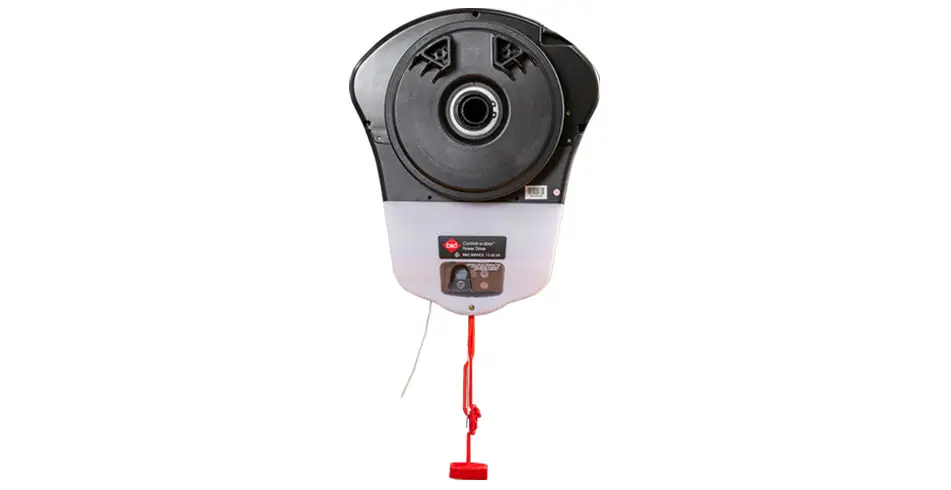
Different doors have different care instructions. The current Power Drive/Roll-A-Pro manual’s rolling-door care guidance calls for clean internal guide sections and identifies silicone spray for that application; it warns against grease and products such as WD40 or RP7 there. That is not an instruction to spray every sectional track, roller, spring or opener.
Follow the actual door’s instructions for permitted products and locations. If you cannot identify the component or lubricant requirement, leave it for the service technician. Lubrication cannot fix a bent track, worn bearing or unbalanced door.
Have the cause corrected
A trained technician can inspect rollers, hinges, guides, fixing points, balance and the opener, then recommend the relevant repair. Ask whether wear elsewhere has contributed to the noise and what work is included.
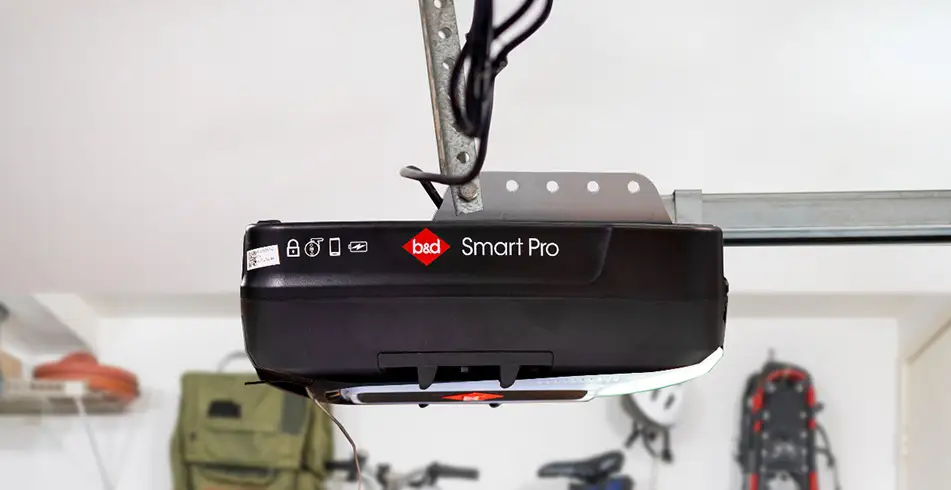
Follow the care and service schedule supplied with your actual door and opener. Our current Power Drive RDO-1V4/Roll-A-Pro RDO-1V3 and Smart Pro SDO-9V3/Smart SDO-7V3/Secure SDO-6V3 manuals call for the initial service within 12 months or 3,000 cycles, whichever comes first, then the listed ongoing service schedule. High use or particular conditions may need additional attention. Keep service records and use the applicable warranty terms.
What to tell us when booking
- Door type, approximate age and the opener model.
- When the noise began and where it appears to come from.
- Whether movement is uneven, slow, reversing or obstructed.
- Any recent impact, storm exposure or repair.
- Whether the door is currently open, closed or stuck.
Our local provider confirms appointment availability, call-out costs and scope. Keep the door out of use if its condition is unsafe while you wait.
Explore the relevant B&D information
Talk to us about your garage
Tell us what you have, what you want to change and any model details. We can help you find the appropriate next step for your door and property.